


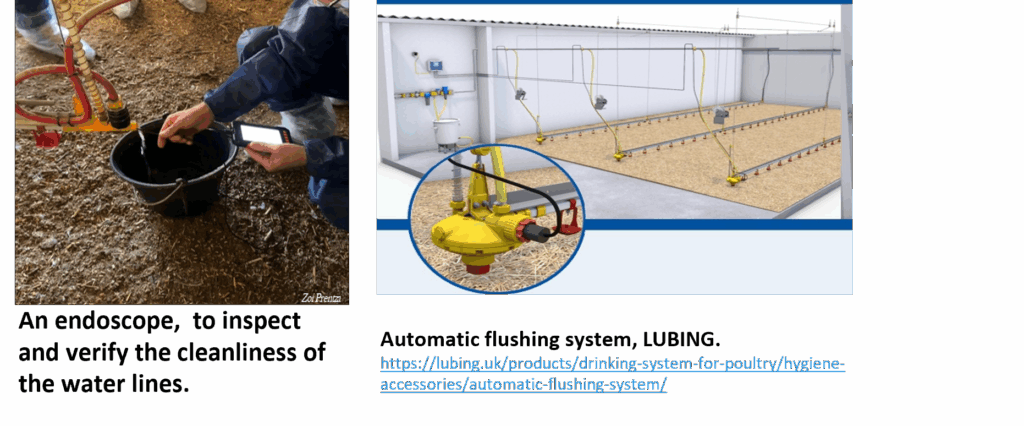
Maintaining proper water hygiene is critical in poultry farming, it has a direct impact on bird health, performance, and overall welfare. One of the most effective methods for ensuring clean water supply systems is the use of an automatic flushing system. This practice involves a continuous flow of high-pressure water to mechanically remove biofilm, which often harbors bacteria, viruses, and parasites. Biofilm buildup in water lines can reduce water flow, leading to dehydration and compromised feed intake, while also acting as a source of infectious diseases.
The auto-flushing system is a cost-effective solution, with installation expenses of approximately € 2000-3500 per poultry house. An endoscope, costing around €100, can be employed to inspect and verify the cleanliness of the water lines after flushing. This combination of technologies ensures thorough cleaning and provides visual confirmation that the system remains free from debris and contaminants.
Key benefits of auto-flushing include the prevention of clogs in the water lines, reduced maintenance costs, and improved system longevity. More importantly, it minimizes the risk of disease transmission, fostering healthier birds and reducing the need for medical interventions. Additionally, it supports sustainable farming practices by promoting optimal water usage and reducing chemical dependence.
Despite the benefits, challenges include the need for proper infrastructure to generate adequate water pressure, training personnel to operate the system, and maintaining regular monitoring. However, the long-term gains in bird health, productivity, and cost-efficiency outweigh the initial investments. Auto-flushing represents a practical and effective solution for modern poultry farms, enhancing both operational efficiency and animal welfare.