


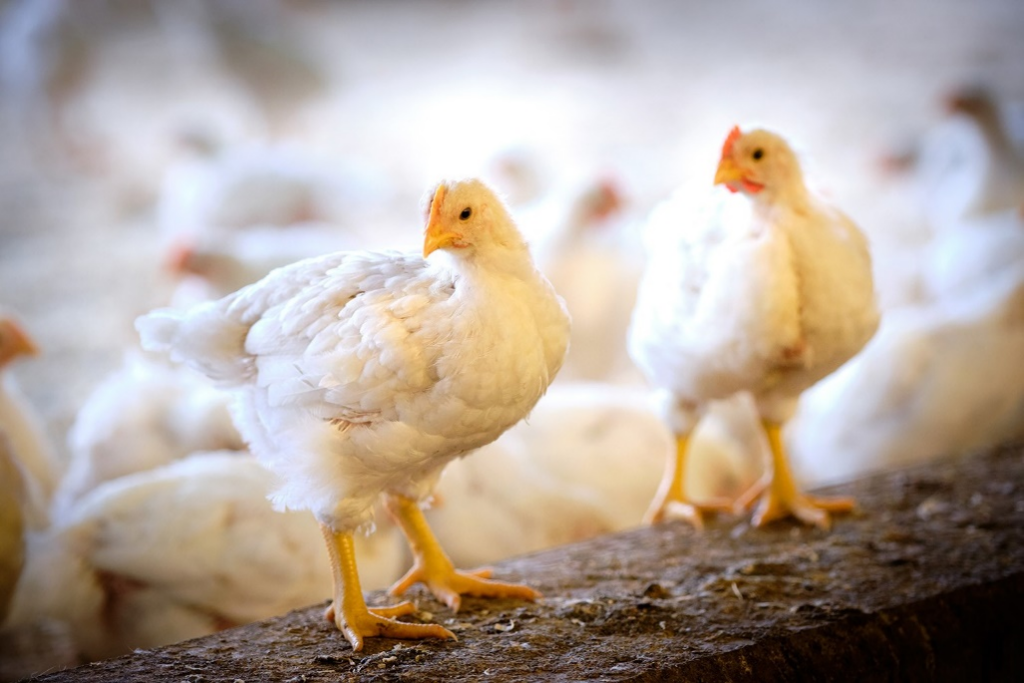
This practice focuses on keeping poultry litter dry and friable throughout the production cycle by combining early, regular aeration with targeted additions of fresh material. Moisture and compaction are key drivers of ammonia release, and by limiting both, farmers can significantly reduce ammonia emissions and improve air quality in the poultry house. In practice, litter should be lightly stirred from start-up to around day 20, approximately every five days, mainly under drinker lines where wet spots develop. Mechanical tools such as a scarifier can be used. Aeration must be combined with well-adjusted ventilation (airflow, temperature and humidity) to ensure effective drying. Fresh litter should be added locally in wet or caked areas. An effective farmer’s protocol starts with about 2 kg of litter/m² of dehydrated wood shavings on a concrete floor, followed by weekly targeted additions (around 2.5–3 kg of litter/m²) in degraded zones. Although the combined use of wood shavings and straw increases litter costs (about €1.19/m², or €1,600 per 1,350 m² house, compared with €300 for straw only), overall gains can reach around 10% thanks to better performance. Benefits include lower ammonia, improved footpad health (with potential bonuses of €25 per ton when pododermatitis is below 10%), +10% average daily gain, +10% feed efficiency, and -10% mortality and culls. Key recommendations: act early, avoid waiting for crust formation, use a mix of materials (straw alone is less effective), and monitor climate sensors carefully. Expect around 17 hours of additional labour per batch. When properly implemented, this practice delivers environmental, economic and welfare gains for farmers.