


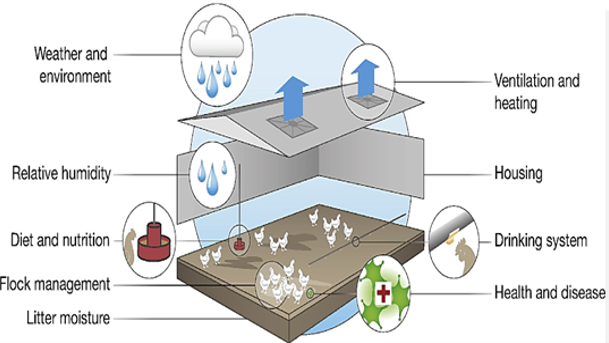
This Good Practice (GP) offers a systematic approach to controlling litter wetness—a critical factor for bird welfare, health, and environmental sustainability.
Implemented on a conventional farm with 120,000 birds per year, the strategy utilizes a 9-step management audit to keep moisture levels below 25–30%.
The audit covers a wide range of farm systems: sampling litter at key locations (near drinkers and feeders), selecting high-absorption bedding like wood chips or rice hulls, and performing daily maintenance of water distribution systems. Advanced techniques include Precision Feeding—using Near Infrared Spectroscopy (NIR) and enzymes to improve digestibility—and the application of moisture-absorbing additives like Zeolite.
Performance is monitored via automated sensor technology and indirect indicators such as footpad health and ammonia concentrations.
Implementation yields significant benefits: up to a 2% reduction in mortality and morbidity, improved footpad health, and lower emissions of ammonia (NH3), and methane (CH4). While high-quality bedding and additives increase operational costs, the practice is considered highly relevant and easy to adopt across Europe, leading to an overall increase in ROI and farm profitability.