


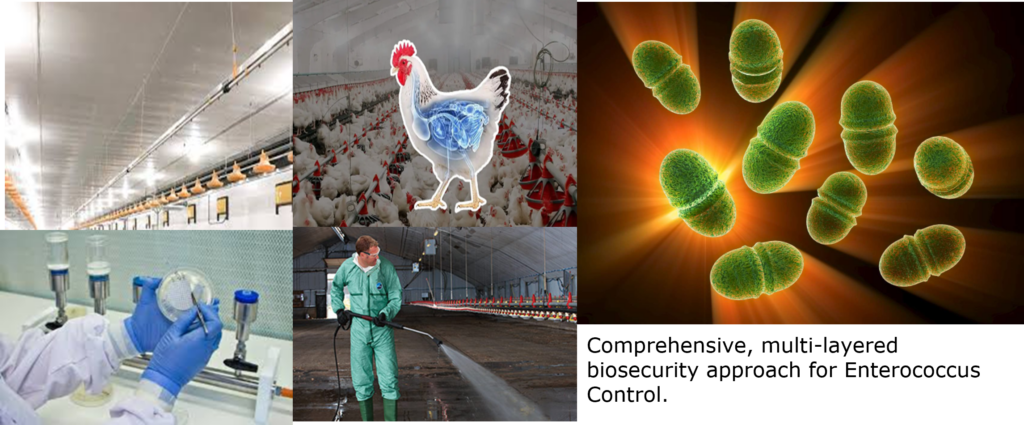
This Good Practice focused on the mitigation of Enterococcus, a persistent pathogen that poses a significant threat to bird health, welfare, and farm profitability.
The strategy involves a comprehensive, multi-layered biosecurity approach implemented across a large-scale production system involving 50 million birds annually. Enterococcus strains are associated with increased mortality, lameness (e.g., femoral head necrosis, spondylitis), and systemic infections, leading to substantial welfare and economic losses. Their capacity to persist in biofilms within water lines and porous surfaces renders conventional sanitation insufficient, necessitating a preventive strategy.
The approach shifts from reactive treatment to proactive prevention, structured around three core pillars. First, environmental and structural integrity is reinforced through smooth, non-porous surfaces and a standardized 3–5-day structured cleaning protocol including thermal treatment and complete drying, with intensified deep-cleaning during outbreaks. Second, water system hygiene and biofilm control are ensured through thermal disinfection and systematic microbiological monitoring. Third, targeted microbial control includes environmental probiotic spraying before chick placement, strict hatching egg disinfection to prevent vertical transmission, and nutritional strategies (probiotics, synbiotics, phytogenics) that promote a stable and diverse gut microbiome.
Overall, this GP delivers a favorable return on investment through reduced mortality, improved feed conversion and growth performance, and lower risk of secondary pathogen detection and emergency interventions.