


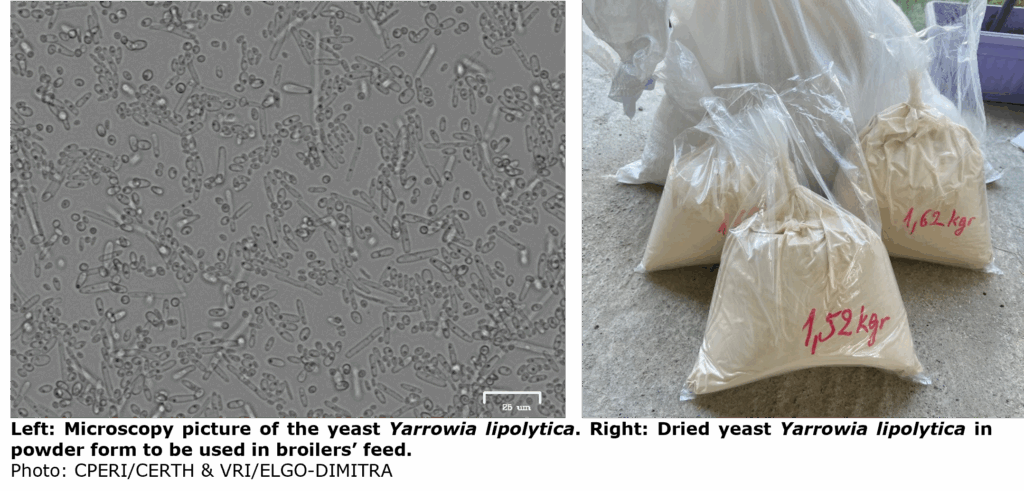
The integration of Yarrowia lipolytica yeast supplementation in the diet of slow-growing broilers represents an innovative and sustainable approach to improve animal welfare and meat quality.
This practice involves the addition to broiler feed of 3% and 5% Yarrowia lipolytica yeast, cultivated on byproducts not suitable for human consumption, thereby contributing to waste reduction and enhancement of the environmental sustainability of poultry farming. Although body weight gain showed no significant changes, notable benefits were observed in other key areas. The 3% supplementation notably improved foot health, addressing common welfare issues such as lameness, while enhancing overall animal comfort. Furthermore, both supplementation scenarios led to improvements in meat quality, characterized by increased levels of monounsaturated fatty acids (MUFA) and polyunsaturated fatty acids (PUFA), alongside a reduction in saturated fatty acids (SFA). These changes resulted in a more favorable PUFA/SFA ratio, which is associated with healthier meat profiles, meeting the growing consumer demand for nutritious food options. Notably, these benefits were achieved without negatively affecting growth rates, suggesting that Yarrowia lipolytica supplementation enhances broilers’ welfare and meat quality without compromising productivity.
This practice aligns with circular economy principles by reducing waste and improving resource efficiency, offering a practical and eco-friendly solution to lower the environmental footprint of broiler production while promoting animal well-being. The findings suggest that Yarrowia lipolytica supplementation holds significant potential for sustainable poultry farming, enhancing both animal health and the nutritional value of meat.